Plastic Bag Thickness: Mil, Micron and Gauge Chart by Bag Type
How mils, microns and gauge convert, how thick each common bag is, a trash bag thickness chart, and how to measure a bag with a scale or a micrometer.
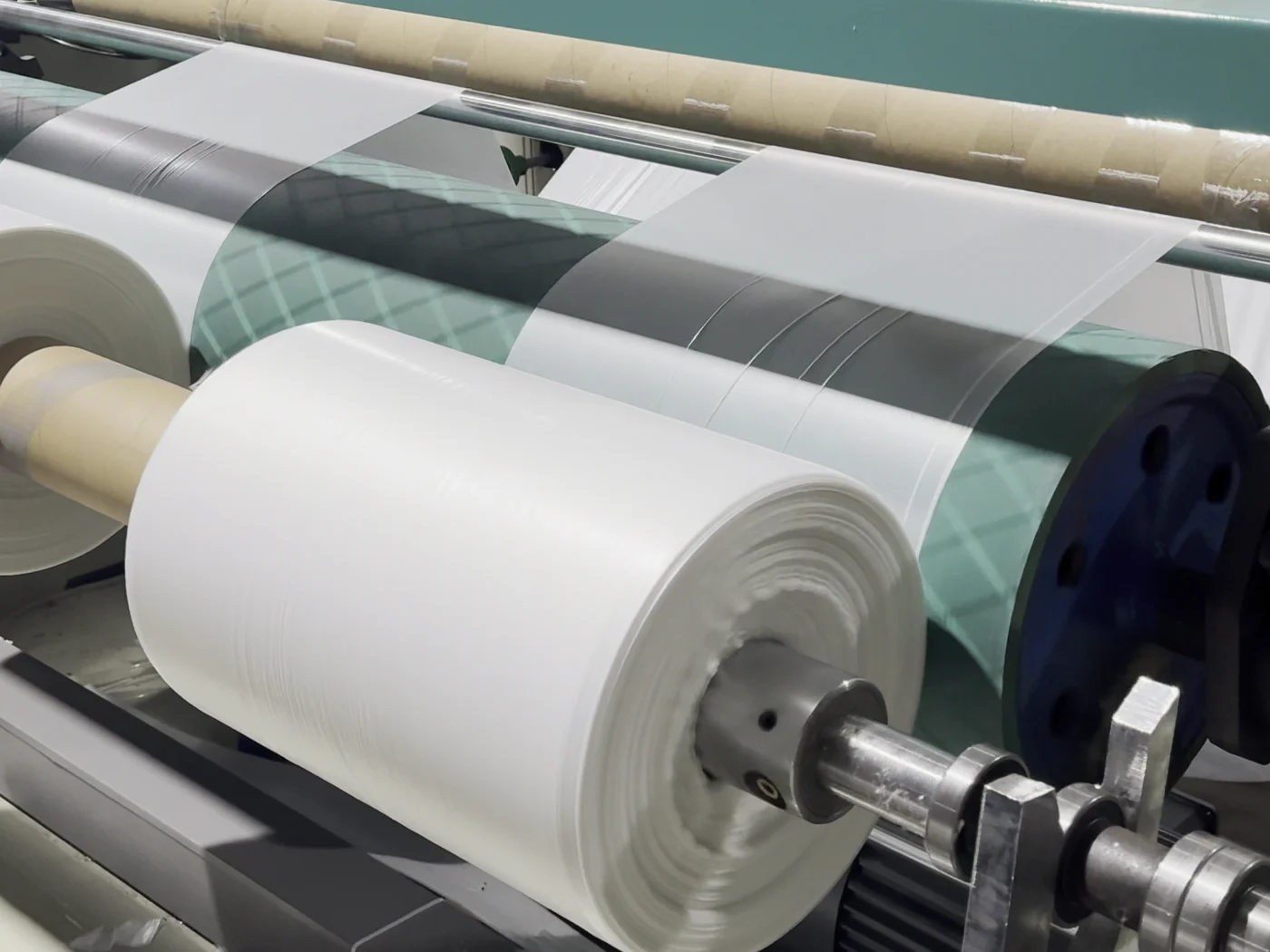
Plastic bag thickness is measured in mils, microns or gauge. One mil is one thousandth of an inch, which equals 25.4 microns or 100 gauge. Most bags fall between 0.3 mil (about 8 microns) for a thin produce bag and 6 mil (about 150 microns) for a heavy contractor bag.
This guide is for people who buy, specify or make plastic bags. We build blown film machines and bag making machines, so we also explain where thickness comes from on the production line. All thickness figures in this article refer to one wall of the bag.
Mil, micron and gauge: how they convert
A mil is 0.001 inch, a micron (µm) is 0.001 mm, and gauge is mils times 100. So 1 mil = 25.4 µm = 100 gauge. To go from microns to mils, divide by 25.4. To go from microns to gauge, multiply by about 3.94.
| Mil | Microns (µm) | Millimeters | Gauge |
|---|---|---|---|
| 0.3 | 7.6 | 0.008 | 30 |
| 0.5 | 12.7 | 0.013 | 50 |
| 0.75 | 19.1 | 0.019 | 75 |
| 1.0 | 25.4 | 0.025 | 100 |
| 1.5 | 38.1 | 0.038 | 150 |
| 2.0 | 50.8 | 0.051 | 200 |
| 3.0 | 76.2 | 0.076 | 300 |
| 4.0 | 101.6 | 0.102 | 400 |
| 6.0 | 152.4 | 0.152 | 600 |
Exact conversions, rounded to one decimal. Gauge here is the plastic film gauge (100 per mil), not the wire or sheet metal gauge.
In the US, mil thickness is the usual way to describe bags, while most of the world uses microns. In Mexico and parts of Latin America, film is often sold by calibre, which follows the same scale as gauge: calibre 200 is 2 mil, about 51 microns. Whatever unit you use, a bigger number always means a thicker film.
Write plastic bag thickness on every quotation and order as one number with one unit and the words “per wall”, for example “25 µm per wall”. A supplier who reads 50 µm as the total of both walls will make you a bag half as thick as you expected.
What is the thickness of plastic bags? A chart by bag type
Plastic bag thickness for common bags ranges from about 0.3 mil for produce bags to 3 mil or more for freezer and contractor bags. Thin bags are usually HDPE, which is strong at low thickness. Thicker, softer bags are usually LDPE or LLDPE.
| Bag | Usual resin | Typical thickness (per wall) | Our machines |
|---|---|---|---|
| Produce bag on a roll | HDPE | 0.3–0.5 mil (8–13 µm) | Film: SJ-A · Bags: YB400 |
| T-shirt grocery bag | HDPE | 0.4–0.8 mil (10–20 µm) | Bags: MFHQB (8–35 µm film) |
| Dry cleaning bag | LDPE | About 0.75 mil (19 µm) | Film: SJ-A |
| Bread bag | LDPE | About 1 mil (25 µm) | Film: SJ-A |
| Kitchen trash bag | LDPE or LLDPE | 0.7–1.0 mil (18–25 µm) | Film: MF-C · Bags: YB400 |
| Retail merchandise bag | LDPE | 1–2 mil (25–50 µm) | Film: SJ-A or MF-ABA |
| Freezer bag | LDPE or LLDPE | 1.75–3 mil (45–76 µm) | Film: MF-ABA |
| Contractor bag | LDPE or LLDPE | 3–6 mil (76–150 µm) | Film: MF-C (up to 0.10 mm) |
Common ranges published by US bag suppliers. Brands and markets differ, so treat them as a starting point, not a standard.
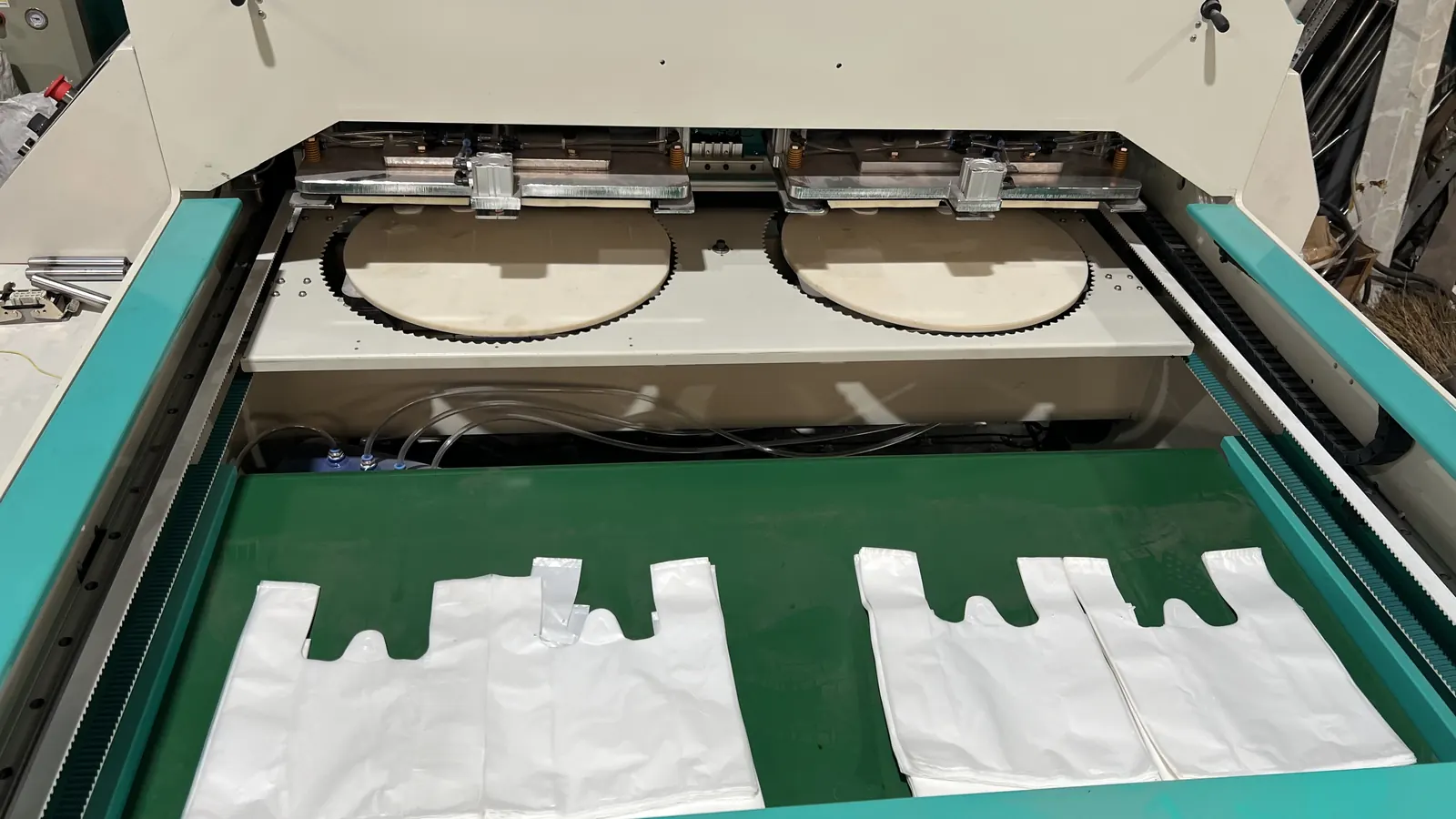
To copy a bag you already sell, weigh 10 of them and use the formula in the measuring section below. It gives you the real average thickness in a few minutes, even if the bag has no label and no specification.
Trash bag thickness chart
A good thickness for a trash bag depends on the resin and the load. LDPE trash bags are usually 0.5 to 1.5 mil for home and office use and 2 to 6 mil for heavy or sharp waste. HDPE trash bags are thinner, usually 6 to 24 microns, because HDPE is stronger at the same thickness.
| Use | LDPE / LLDPE (sold by mil) | HDPE (sold by micron) |
|---|---|---|
| Light duty: office, bathroom, paper | 0.35–0.5 mil | 6–10 µm |
| Medium duty: kitchen | 0.7–1.0 mil | 10–16 µm |
| Heavy duty: yard, restaurants, larger cans | 1.2–2.0 mil | 16–24 µm |
| Contractor: debris, sharp waste | 3–6 mil | Rarely HDPE |
Typical ranges from US can liner suppliers. HDPE and LDPE numbers are not comparable one to one.
Trash bag thickness is quoted in different units for each resin, and for a reason. HDPE liners are stiff and strong but tear once punctured, and they work best for paper and dry waste. LDPE and LLDPE liners stretch around sharp objects instead of tearing. Our guide on HDPE vs LDPE explains the difference in more detail.
When you compare trash bag offers, ask for the resin first and the thickness second. A 16 µm HDPE liner and a 1.0 mil LDPE liner can both be fine for a kitchen, but they fail in different ways, and only a load test with your own waste shows which one suits your customers.
Which is thicker, 2 mil or 4 mil plastic?
4 mil plastic is thicker. It is twice as thick as 2 mil: 4 mil is about 102 microns and 2 mil is about 51 microns. With mils, microns and gauge, the higher number is always the thicker film. In the same way, 10 mil is thicker than 5 mil, and 7 mil is thicker than 1 mil.
Thickness is not the only thing that decides strength, though. A 2 mil LLDPE bag can carry more than a 3 mil bag made from a weaker blend, which is why resin and thickness should always be specified together.
How to measure plastic bag thickness
You can measure plastic bag thickness in two ways: with a micrometer on a single wall, or by weighing the bag and calculating. The micrometer gives the thickness at one point. The weighing method gives the average over the whole bag, which is what matters for cost.
With a micrometer. Cut the bag open and measure one wall. Take five readings across the width, away from folds, gussets and seals, and use the average. A micrometer that reads to 0.001 mm is enough for bags.
With a scale. Weigh the bag in grams, measure its flat width and length in meters, and divide. Use a density of 0.92 g/cm³ for LDPE and LLDPE, and 0.95 g/cm³ for HDPE. For example, an LDPE bag of 0.60 × 0.90 m that weighs 25 g is 25 ÷ (2 × 0.60 × 0.90 × 0.92), or about 25 µm. That is roughly 1 mil.
The weighing method ignores the handles and gussets, so it works best on flat bags. For T-shirt bags, weigh before the handles are cut out or use the micrometer.
Where bag thickness comes from on the production line
Plastic bag thickness is set on the blown film machine, not on the bag machine. The film thickness equals the die gap divided by the blow-up ratio and the draw-down ratio. In practice, the operator sets it with the haul-off speed and the bubble size, and evens it out around the bubble by adjusting the die bolts.

A bag can only be as even as its film, so plastic bag thickness problems usually start at the extruder. If one side of the bubble runs thin, the bags from that side tear first. Our blown film troubleshooting guide covers uneven gauge and gauge bands.
The bag machine then has to seal that thickness. Thicker film needs more heat or a longer sealing time, and thin HDPE burns through if the knife runs too hot.
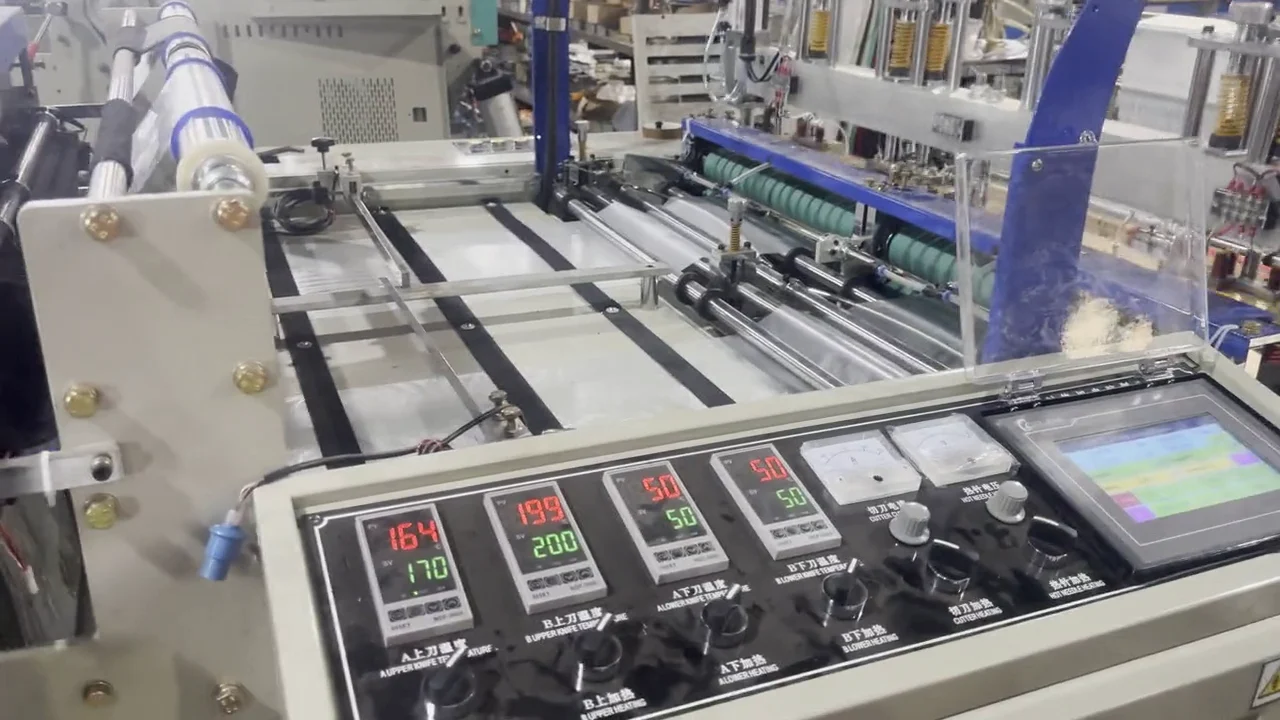
After every change of film thickness, make three test bags, then pull each seal by hand. A good seal tears the film next to the seal line. If the seal itself peels open, raise the knife temperature by about 5 °C and test again.
What thickness our machines make
Our blown film machines cover film from 0.008 to 0.10 mm, or about 0.3 to 4 mil per wall. The SJ-A runs HDPE and LDPE from 0.009 to 0.10 mm. The MF-C makes wide film from 0.01 to 0.10 mm, and the MF-ABA makes three-layer film from 0.015 to 0.08 mm.
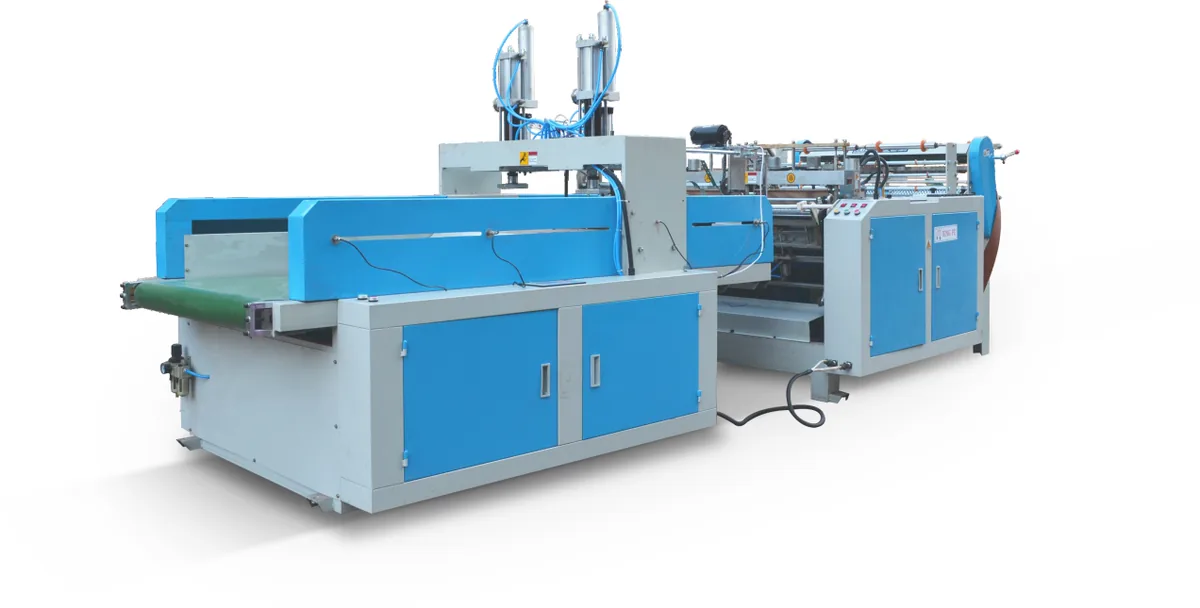
On the bag side, the MFHQB handles thin T-shirt bag film from 0.008 to 0.035 mm, and the MF-SH takes 0.01 to 0.08 mm. Contractor bags above 4 mil (0.10 mm) are thicker than our film lines make, so they are not our market.
Frequently asked questions
What is the thickness of plastic bags?
Most plastic bags are between 0.3 and 6 mil thick, or about 8 to 150 microns per wall. Thin HDPE produce and grocery bags are 8 to 20 microns. Bread and retail bags are about 1 to 2 mil, freezer bags 1.75 to 3 mil, and contractor bags 3 to 6 mil.
What is thicker, 2 mil or 4 mil plastic?
4 mil plastic is thicker. It is twice as thick as 2 mil: about 102 microns against 51 microns. For mils, microns and plastic film gauge, a higher number always means a thicker film. Strength also depends on the resin, so a tougher resin at 2 mil can outperform a weaker blend at 3 mil.
What is a good thickness for a trash bag?
For LDPE trash bags, 0.7 to 1.0 mil suits a kitchen, 1.2 to 2.0 mil suits heavy or wet waste, and 3 mil or more suits construction debris. HDPE trash bags are sold in microns: about 10 to 16 microns for kitchens and 16 to 24 microns for heavy duty use.
Is 1.2 mil thick for a trash bag?
Yes, 1.2 mil is a heavy duty thickness for an LDPE trash bag. It is thicker than a typical kitchen bag of 0.7 to 1.0 mil and suits yard waste, restaurants and larger cans. It is not contractor grade, which usually starts around 3 mil.
What is the thickness of a standard garbage bag?
A standard kitchen garbage bag is usually 0.7 to 1.0 mil thick, about 18 to 25 microns, if it is made of LDPE or LLDPE. If it is made of HDPE, it is usually 10 to 16 microns. Check the resin before comparing two bags by thickness.
What is the typical micron thickness of a trash bag?
HDPE trash bags are typically 6 to 24 microns thick, and LDPE trash bags about 9 to 50 microns, which is 0.35 to 2 mil. Contractor bags go up to about 150 microns. To convert microns to mils, divide by 25.4.
For the unit itself, see the Wikipedia article on the thousandth of an inch, which gives 1 mil as 25.4 µm. Planning to make bags at a certain thickness? Send us the bag size, thickness and resin and we will tell you which film and bag machines fit. We reply within 24 hours.