LLDPE vs LDPE: Key Differences for Plastic Bags and Film
How linear low-density and low-density polyethylene differ, which bags each one suits, and what changes on the blown film machine when you switch between them.
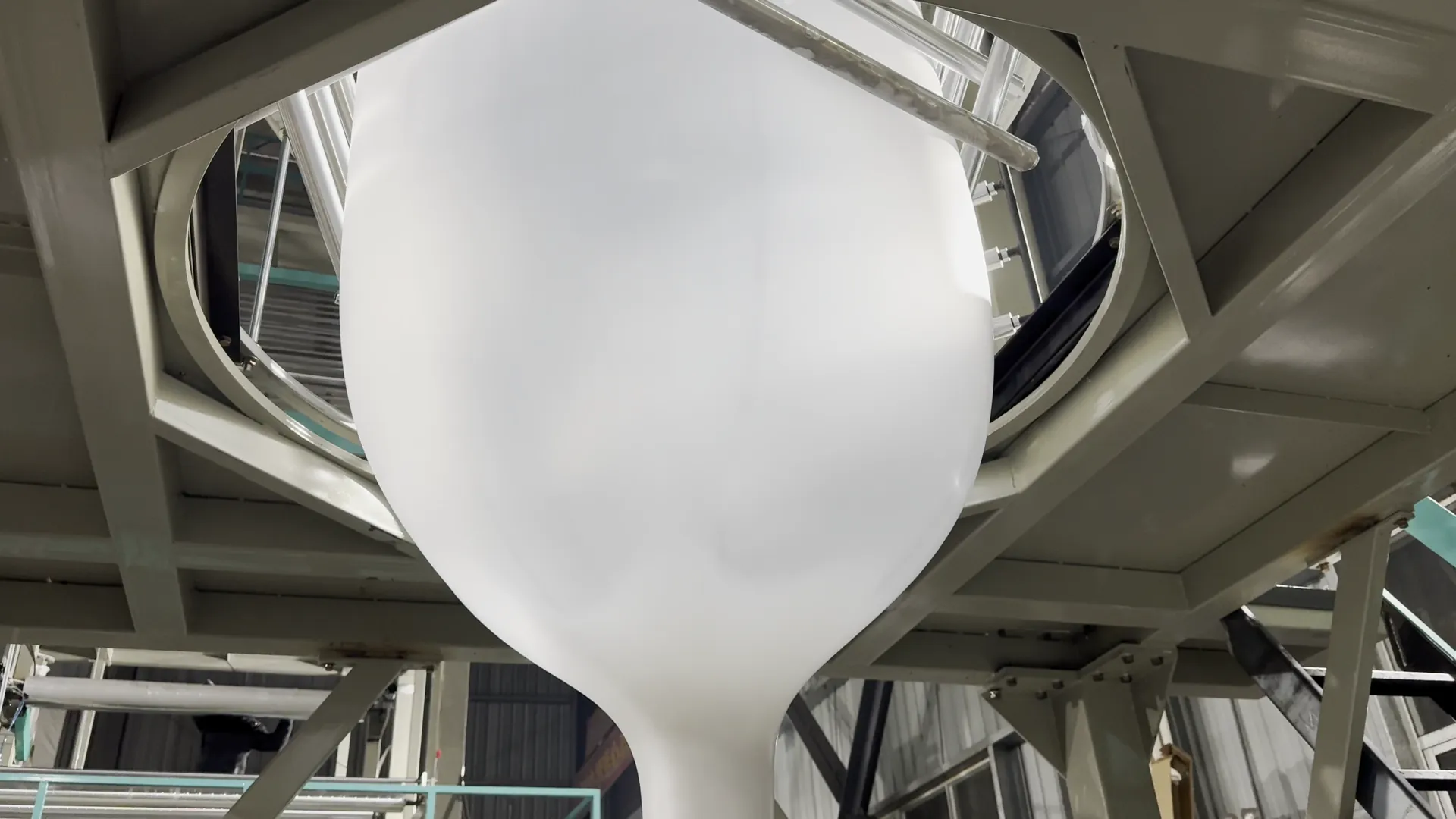
LLDPE vs LDPE comes down to chain shape. LLDPE (linear low-density polyethylene) has a straight backbone with many short side branches, while LDPE (low-density polyethylene) has long, tangled branches. That makes LLDPE film stronger, tougher and more puncture-resistant at the same thickness, and LDPE film clearer, glossier and easier to process.
This guide is written for people who make plastic bags and film, or plan to. Besides the properties, it covers which resin goes into each type of bag and what an operator sees on the extruder when the resin changes. For high-density polyethylene, see our HDPE vs LDPE guide.
LLDPE vs LDPE at a glance
LLDPE and LDPE have almost the same density, but they behave differently in strength, clarity, melting point and processing. The table sums up the points that matter in a bag factory.
| Property | LLDPE (linear low density) | LDPE (low density) |
|---|---|---|
| Chain structure | Linear backbone, many short branches | Highly branched, long and short branches |
| How it is made | Low-pressure process, ethylene with butene, hexene or octene | High-pressure process, free-radical polymerization |
| Typical density | 0.915–0.925 g/cm³ | 0.910–0.940 g/cm³ |
| Tensile, impact and puncture strength | Higher | Lower |
| Gloss and clarity | Lower gloss, slight haze | Clear and glossy |
| Heat sealing | Narrower sealing range | Wider, more forgiving |
| Approx. melting point | About 120–126 °C (248–259 °F) for film grades | About 105–115 °C (221–239 °F) |
| On the extruder | Higher pressure and motor load, less stable bubble | Easy to process, stable bubble |
| Can you go thinner? | Yes, same strength at lower gauge | Needs more thickness for the same strength |
| Resin identification code | 4 | 4 |
Typical values. Density ranges follow the common polyethylene classification. LLDPE melting points are DSC values from resin makers’ film grade data sheets. Each grade has its own sheet.
Both resins carry recycling code 4, so the code on the bag will not tell you which one you have. Ask your resin supplier for the data sheet and read three lines: density, melt index and comonomer. For blown film, look for a melt index around 1 g/10 min or lower.
What is LDPE?
LDPE is the oldest type of polyethylene. It is made at very high pressure, and the chains grow long, randomly placed branches that stop them from packing tightly. That loose structure gives low density, softness and good clarity.
In the melt, the long branches tangle with each other. When the film is stretched, they resist, an effect called strain hardening. This is what holds a blown film bubble steady, and it is the main reason LDPE is so easy to run.
What is LLDPE?
LLDPE is made at low pressure with a catalyst. Ethylene is joined with a small amount of a second monomer, usually butene, hexene or octene. Each comonomer molecule leaves a short side branch on a straight backbone.
Short branches keep the density low, but the straight backbone makes the film much tougher. The chains slide past each other when stretched instead of tangling. The film stretches further before it breaks and resists tears and punctures better. That is why LLDPE film can be made thinner than LDPE film for the same job.
Strength, clarity and sealing: what changes in a bag
In a finished bag, the difference shows up in three places. LLDPE bags take more load and survive sharp corners better. LDPE bags look better on a shelf. The sealing station on the bag machine also needs different settings.
A heavy trash bag made of LLDPE can be thinner than one made of LDPE and still hold the same weight. That saves resin on every bag. A clear retail bag or a printed bread bag still favors LDPE, because LLDPE has less gloss and a slight haze.
LLDPE also has a narrower heat sealing range. If the sealing bar runs too cold, the seal peels open. If it runs too hot, the film burns through. LDPE is more forgiving, which matters when a new operator sets up the machine.
When you change the film from LDPE to LLDPE or to a blend, raise the sealing temperature in small steps of about 5 °C. Pull each test seal by hand. A good seal tears the film next to the seal line, not along it.
Which one for which bag
Use LLDPE where the bag must resist punctures, stretch or heavy loads. Use LDPE where clarity, gloss and easy sealing matter more. In practice, many films are blends or multi-layer structures that use both resins.
| Product | Usual resin | Why | Our machines |
|---|---|---|---|
| Heavy trash bag | LLDPE or LLDPE-rich blend | Puncture resistance at low gauge | Film: MF-C · Bags: YB400 |
| Mailer or courier bag | LDPE and LLDPE, often 3 layers | Stretch and tear resistance | Film: a 3-layer line such as MF-ABA · Bags: MF-600B / 800B / 1000B |
| Stretch wrap | LLDPE | Stretches far before it breaks | Not our product |
| Shrink film | Mostly LDPE | Long branches help the film shrink evenly | Not our focus |
| Clear flat retail bag | LDPE | Gloss and clarity for print | Bags: MF-B |
| T-shirt bag | HDPE, not LDPE or LLDPE | Stiff and strong at very low gauge | Bags: MFHQB |
The most common choices in the market. Your customer’s specification always comes first.
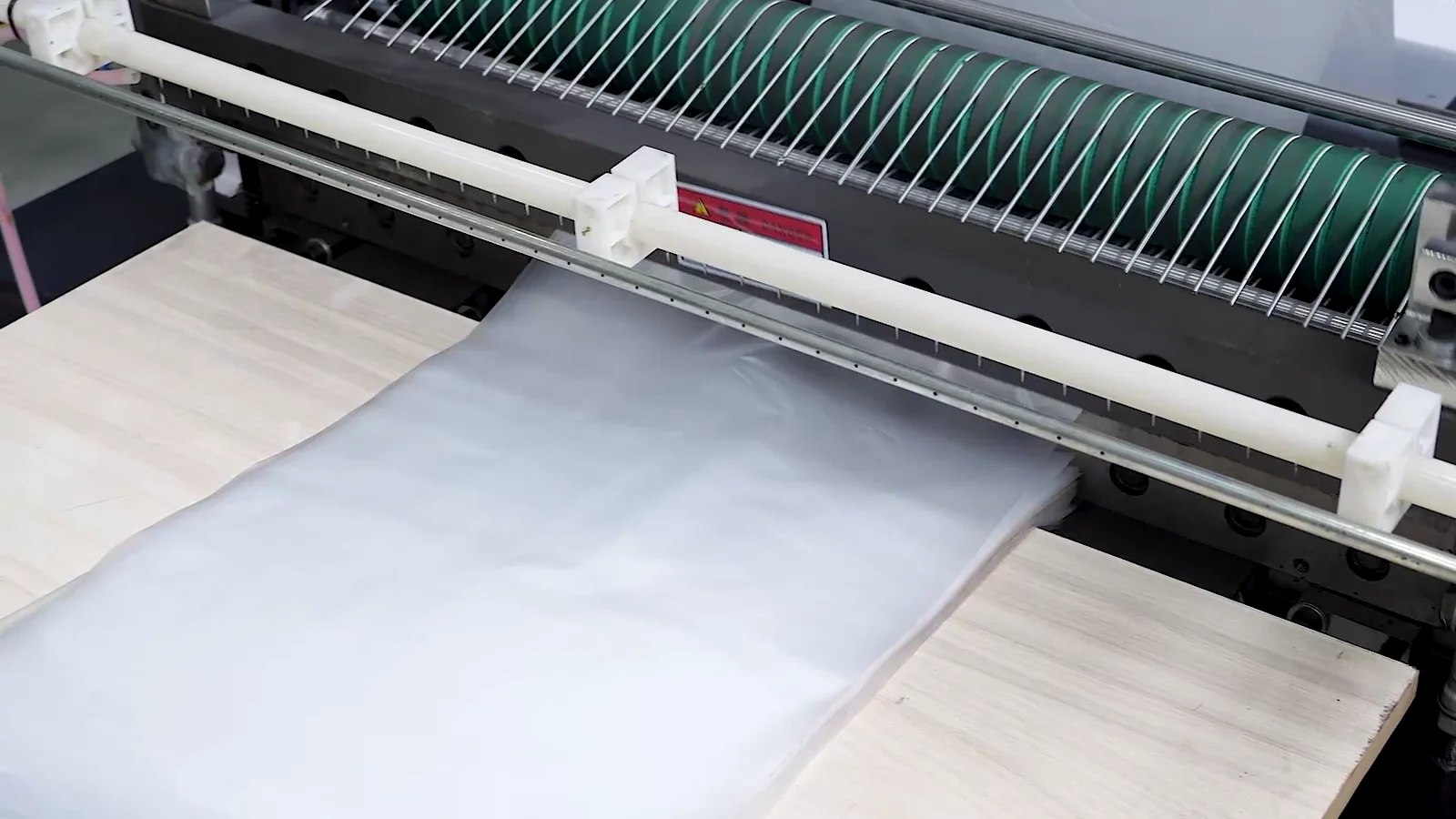
Running LLDPE and LDPE on a blown film machine
The same blown film machine can run both resins, but LLDPE is harder to push and harder to hold. Its melt is stiff when it flows through the screw and die, and soft when the bubble stretches it. Expect higher head pressure and motor current with LLDPE, and a bubble that needs more care. Our blown film troubleshooting guide covers what to do when it moves.
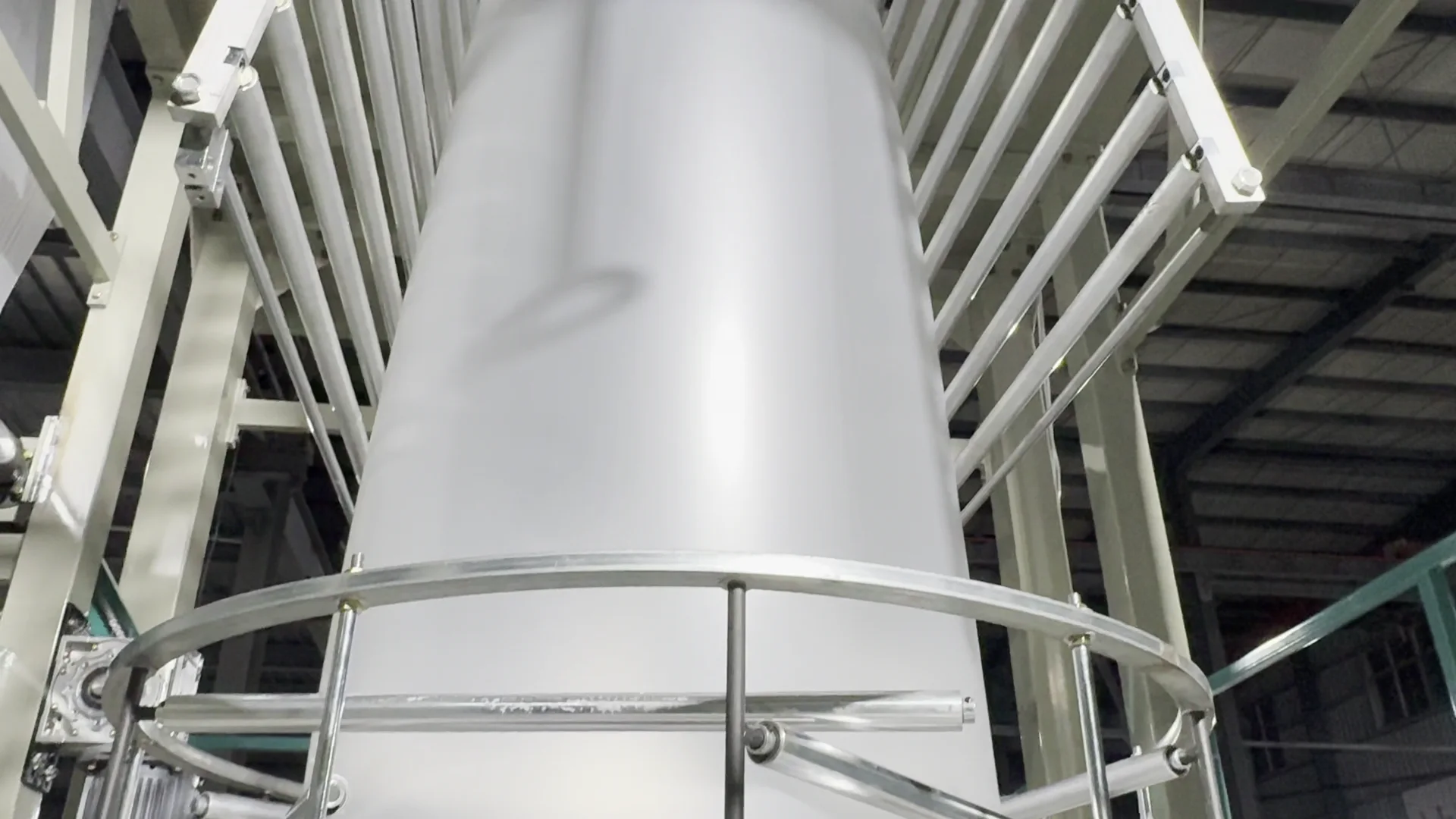
LDPE’s tangled branches hold the bubble steady. LLDPE does not strain-harden, so its bubble can wobble or breathe, especially at high speed.
Three things help. Resin makers sell blown film grades with a low melt index. Many lines run LLDPE with a wider die gap, set according to the resin maker’s processing guide. And a good air ring cools the bubble evenly, which keeps it stable.
The most common fix is a blend. A small share of LDPE added to LLDPE improves melt strength and bubble stability. It costs some toughness, so you add only as much as the bubble needs. There is no fixed ratio. It depends on the grades, the film thickness and the line speed.
On the first run with a new LLDPE grade, start the line slower than your usual LDPE speed. Write down the head pressure and main motor current at each step up. The day you see them rise without a change in output, check the screen pack before you blame the resin.
LLDPE vs HDPE in one table
HDPE is stiffer and stronger at very low gauge, and LLDPE is tougher and stretchier. HDPE makes the crinkly T-shirt bag. LLDPE makes the soft, stretchy trash bag and stretch wrap.
| Property | LLDPE | HDPE |
|---|---|---|
| Density | 0.915–0.925 g/cm³ | 0.941 g/cm³ or higher |
| Film feel | Soft, stretchy, quiet | Stiff, crinkles like paper |
| Best at | Puncture, impact, stretch | Stiffness, tensile strength at low gauge |
| Resin code | 4 | 2 |
| Typical bags | Trash bags, mailers, freezer bags | T-shirt bags, produce bags on a roll |
Our blown film machines for LLDPE and LDPE
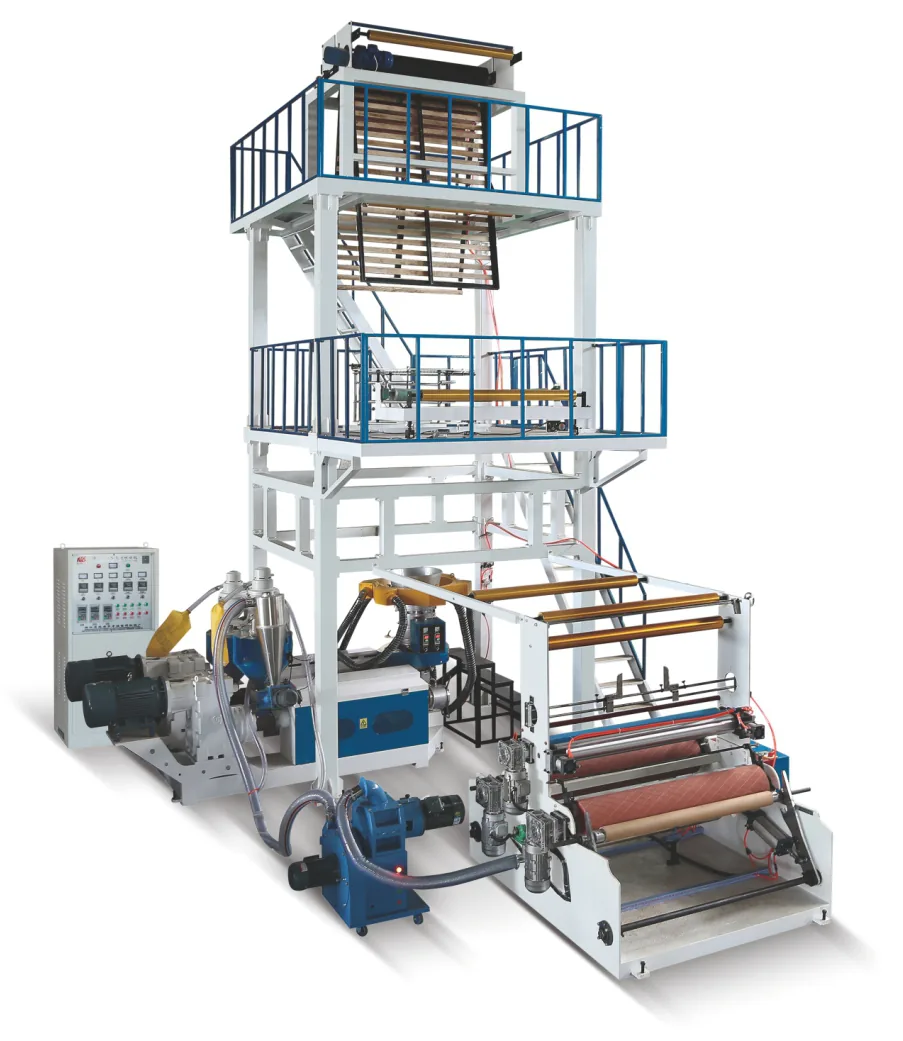
Three of our blown film machine series list LLDPE, LDPE and HDPE as working materials. The MF-ABA 3-layer machine runs two extruders. The outer layers can be clear LDPE or tough LLDPE, while the middle layer takes a cheaper blend or recycled material. It makes 110 to 150 kg/h of film from 0.015 to 0.08 mm thick.
The MF-C high-speed series is a single-layer line from 100 to 220 kg/h, suited to wide film for large bags and garbage bags. For small batches and tests, the YB-500 and YB-700 mini machines make 40 to 50 kg/h.
Send us the film your customer wants: width, thickness, resin and kilograms per day. If you only know the bag, send a sample bag. We work out the film width and gauge from it before we suggest a machine.
Frequently asked questions
What is LLDPE plastic used for?
LLDPE is used mainly for film: stretch wrap, trash bags, mailer bags, freezer bags, liners and agricultural film. Because it resists punctures and stretches far before it breaks, it allows thinner film than LDPE for the same strength. It is also used for flexible tubing, lids, containers and cable covering.
Which is better, HDPE or LLDPE?
Neither is better in every case. HDPE is stiffer and stronger in tension at very low thickness, so it suits T-shirt bags, produce bags and rigid containers. LLDPE is tougher and stretchier, so it suits stretch wrap, heavy trash bags and mailers. Choose by what the film has to survive.
Is LLDPE plastic food grade?
Many LLDPE grades are made for food contact, but not every grade is. Food-grade status belongs to the specific resin grade and the additives in it, not to LLDPE as a material. Ask the resin supplier for a food contact declaration that covers your market, for example US FDA rules for olefin polymers.
What temperature does LLDPE melt?
LLDPE film grades typically melt at about 120 to 126 °C (248 to 259 °F), measured by DSC on resin makers’ data sheets. LDPE melts lower, at about 105 to 115 °C. Processing temperatures on the extruder are much higher than the melting point, and the resin data sheet gives the recommended range.
What is the difference between LDPE, LLDPE and HDPE?
The difference is chain structure and density. LDPE has long, tangled branches and is soft and clear. LLDPE has a straight chain with short branches and is tougher at the same low density. HDPE has few branches, a density of 0.941 g/cm³ or more, and is the stiffest of the three.
Is LLDPE more expensive than LDPE?
Resin prices move with the market, and the gap between LLDPE and LDPE changes from month to month. Compare cost per bag, not per kilo. LLDPE often allows a thinner film for the same strength, so each bag can use less resin even when the price per kilo is similar or slightly higher.
Sources for the material data: the Wikipedia article on LLDPE and resin makers’ film grade data sheets. Not sure whether your film needs LLDPE, LDPE or a blend? Write to us with the bag type and kilograms per day, and we will reply within 24 hours.